Redüktör Hesabı en


Gearbox Calculation

The correct selection of a gearbox does not end with determining its type; capacity, torque, speed, and power values must also be clarified through engineering calculations. Incorrect calculations can lead to problems such as insufficient torque, overloading, energy loss, or premature failure. Therefore, gearbox calculation is one of the most critical stages of the selection process.
Key Parameters Considered in Gearbox Calculation

1. Input Power (P)

The power provided by the motor, usually expressed in kW or HP.

Formula:

Here, T = Torque (Nm), n = Speed (rpm).

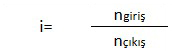
2. Gear Ratio (i)

It is the ratio of input speed to output speed.

Formula:

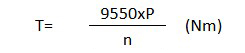
3. Torque Calculation (T)

It is the moment of force required to move the load.

Formula:

4. Service Factor (SF)

It is the capacity coefficient based on operating conditions (load variation, shock, operating time).

For heavy-duty applications, SF ≥ 1.5; for light loads, SF ≈ 1.0.

5. Environmental Conditions and Safety Factor

An additional safety margin is added by considering factors such as temperature, humidity, dust, and vibration.

Example Calculation

Given:

Motor Power: 5.5 kW

Input Speed: 1500 rpm

Output Speed: 50 rpm

Service Factor: 1.4


Steps:

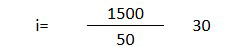
1. Gear Ratio:

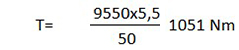
2. Output Torque:


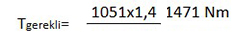
3. Applying the Service Factor:


As a result, a gearbox that can meet these values should be selected.


Common Mistakes Made in Calculation


Making a selection based only on motor power.


Ignoring the service factor.


Not taking operating environment conditions into account.


Not considering instantaneous (starting) loads.

Remak Academy’s Comment:

“Accurate gearbox calculation ensures both your machine’s day-one performance and its trouble-free operation for years. In engineering, not estimation but calculation is essential.”